
A capsule wardrobe is the antidote to a full closet and the classic thought: “somehow I still have nothing to wear.”
Instead of owning loads of pieces that individually look fine but don’t work together, you build a smaller core where most items mix-and-match on purpose. Less chaos, more outfits, faster mornings. Outfint is a wardrobe app built around exactly this idea: digitise your clothes, plan your outfits, and see which combinations actually work, without relying on memory at 7am. In this guide, we’ll cover:
- What a capsule wardrobe is (and what it isn’t)
- The 3-3-3 rule for clothes
- The 70/30 wardrobe rule
- The 5-5-5 rule for clothing
One quick thing before we start: these “rules” aren’t official fashion laws. They’re just useful frameworks people use when they want a wardrobe that behaves.
TL;DR: Which capsule rule should you use?
If you want the short version:
- 3-3-3 = fastest reset. Great for travel, busy weeks, or when decision fatigue is winning.
- 70/30 = best for your whole wardrobe. Keeps you practical without turning you into a beige robot.
- 5-5-5 = a slightly bigger capsule. Good if 3-3-3 feels too tight, or you want an easy seasonal edit.
If you’re stuck, start with 3-3-3 for a week. It’s the quickest way to see what you actually reach for.
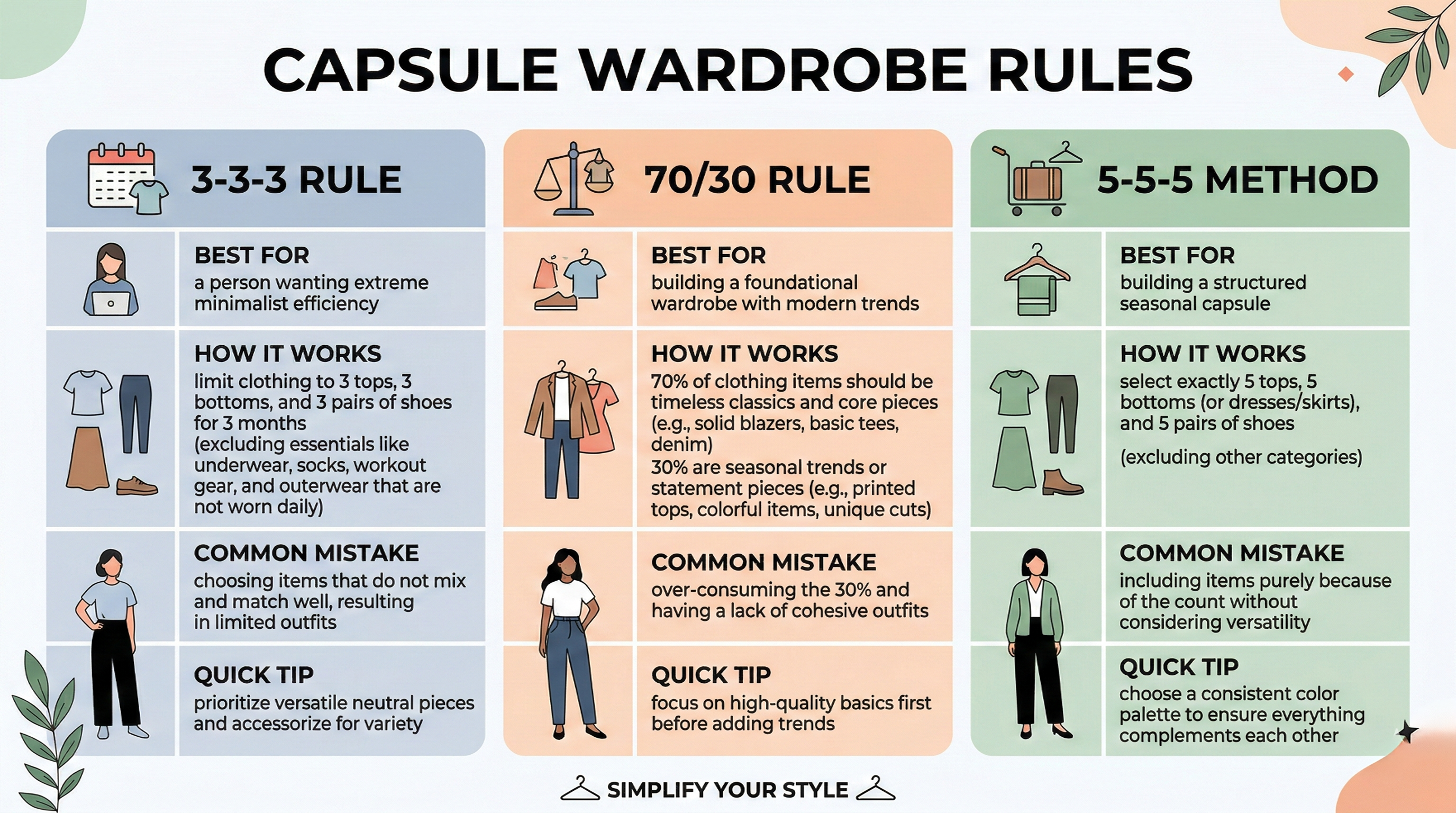 Fig. 1 - A quick cheat sheet comparing the 3-3-3, 70/30, and 5-5-5 capsule wardrobe rules.
What is a capsule wardrobe?
A capsule wardrobe is a curated set of versatile clothing that can be combined in different ways to cover lots of outfits and occasions, without owning excessive items.
The vibe is simple: a foundation of staples in colours that play nicely together, plus a handful of seasonal or personality pieces so you still look like you.
Why people build a capsule wardrobe
- Less decision fatigue (fewer items, fewer dead ends)
- More outfits per item (higher cost-per-wear value)
- Easier shopping (you stop buying “random” pieces that don’t match anything)
- Easier packing (weekends away and work trips become painless)
- Better visibility (tools like Outfint show you which pieces you actually reach for vs. which just take up space)
What a capsule wardrobe is not
- Not “own 10 items forever”
- Not “only neutrals”
- Not “no trends allowed”
It’s just a wardrobe where most things work together on purpose.
The 3-3-3 rule for clothes
The 3-3-3 rule is a quick “micro capsule wardrobe” formula:
- 3 tops
- 3 bottoms
- 3 pairs of shoes
Because each top can pair with each bottom and each shoe option, you can create a surprising number of outfit combinations from just 9 items.
If you want the nerdy bit: that’s 3 x 3 x 3 = 27 outfit combinations, before you even add layers or accessories.
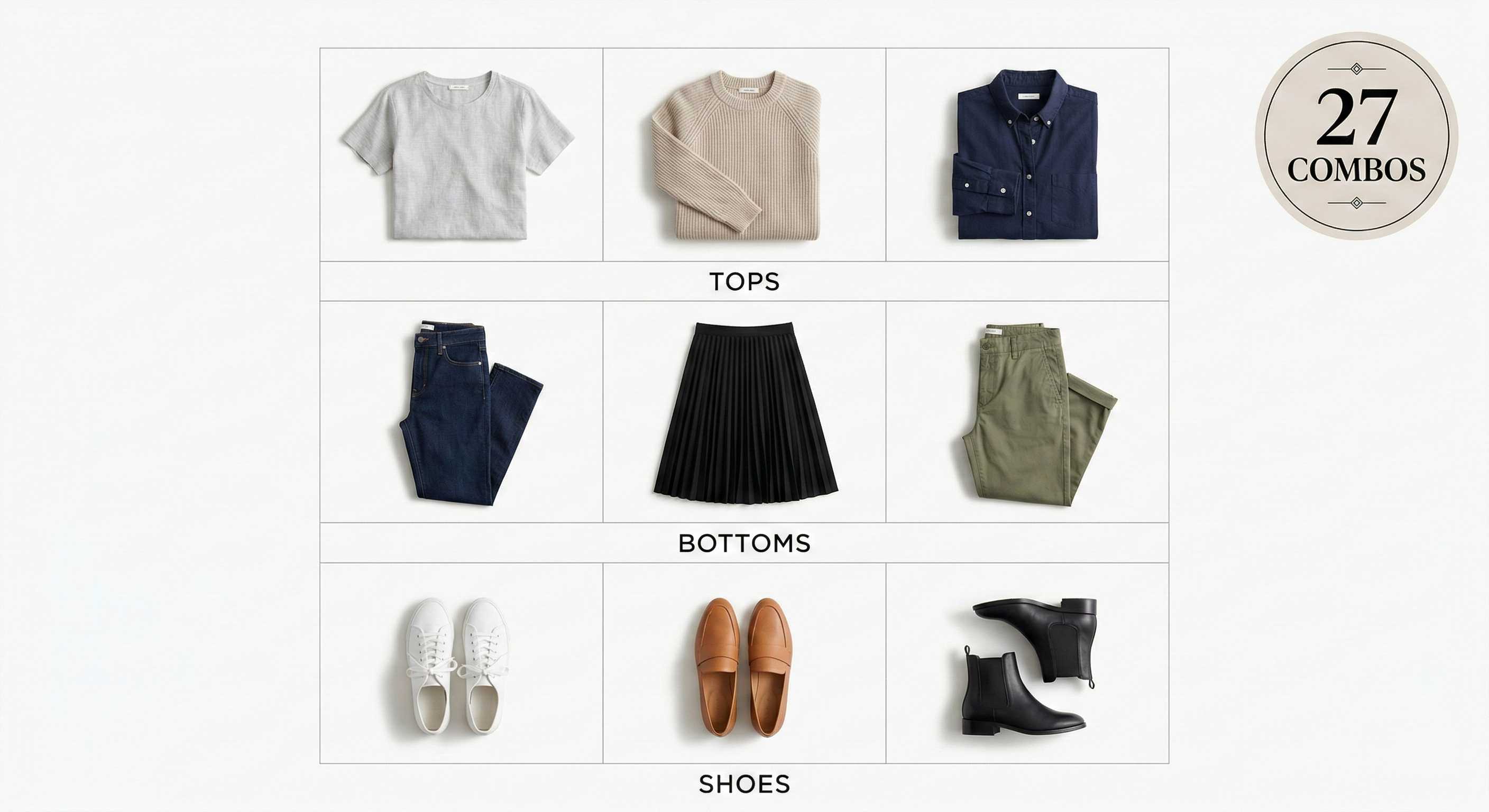 Fig. 2 - The 3-3-3 rule visualised: 3 tops, 3 bottoms, and 3 shoes that all mix and match.
It’s commonly used for travel, busy weeks, or as a simple starting point when you feel overwhelmed.
How to make the 3-3-3 rule work (unisex, real life)
Pick items that cover different “modes” of your week:
- Top options: one casual, one smarter, one layering-friendly
- Bottom options: one relaxed, one “polished”, one weather-proof or comfort-first
- Shoes: one everyday, one smarter, one practical (walkable / rain-ready)
Tip: your practical shoe matters more than you think. If it can’t handle walking + weather, it won’t get worn.
The 70/30 wardrobe rule
The 70/30 wardrobe rule is about balance:
- 70% staples / essentials (the repeat-wear basics you rely on)
- 30% statement / personality pieces (colour, prints, trend items, special cuts)
The point is to keep your wardrobe functional while still feeling like you. When your wardrobe is mostly staples, getting dressed becomes easier because most items naturally coordinate.
This rule is less about counting items perfectly and more about checking the balance.
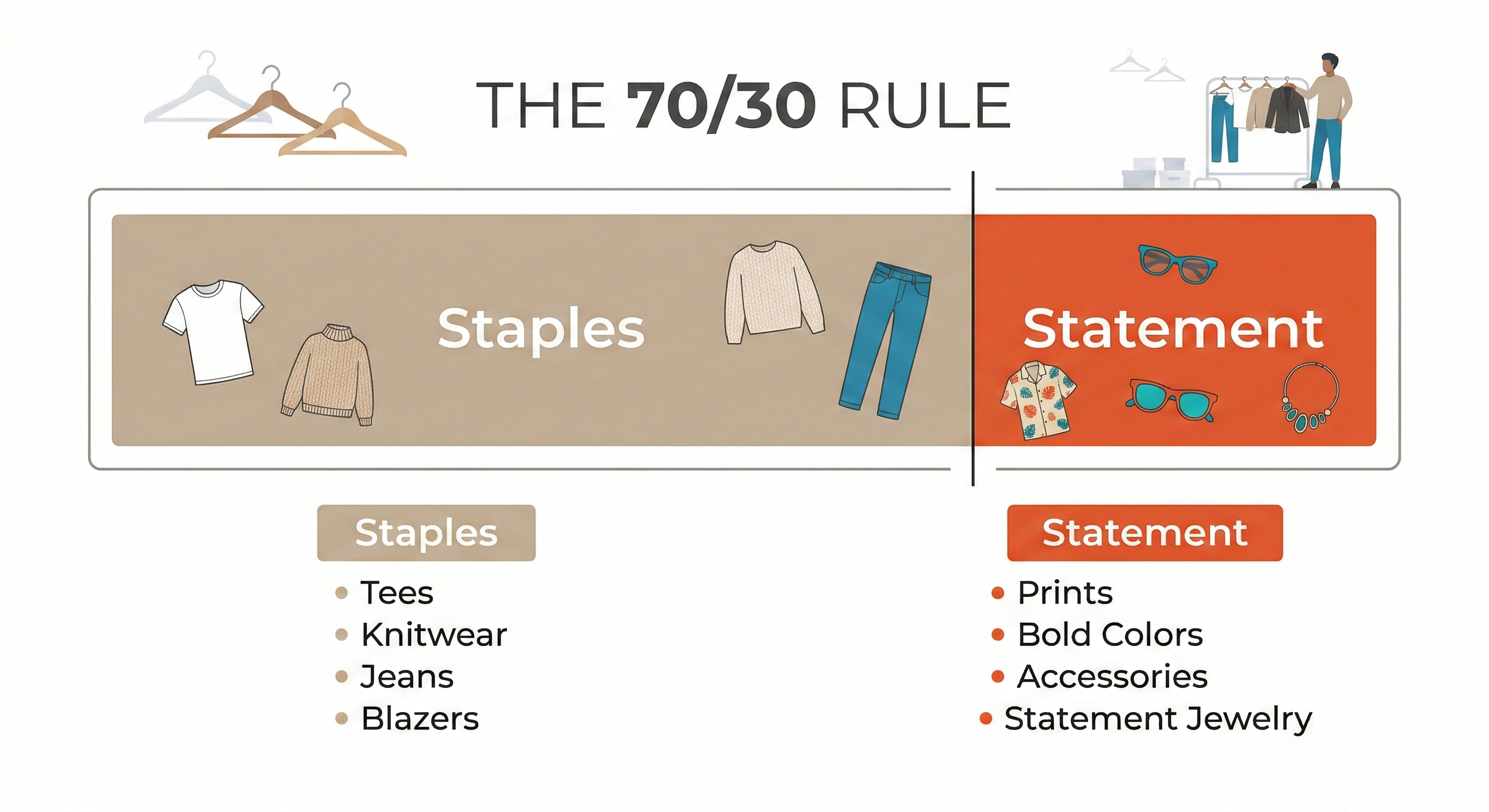 Fig. 3 - The 70/30 wardrobe rule: keep the majority as easy-to-wear staples, and reserve a smaller share for statement pieces.
What counts as “70% staples”?
Think: solid tees, knitwear, shirts, jeans/trousers you trust, outerwear you actually reach for, versatile shoes.
What counts as “30% statement”?
Prints, bold colours, trend pieces, “going out” items, standout accessories.
Common mistake: people accidentally build the opposite (70% statement, 30% basics), then nothing matches and the wardrobe feels like a group project you didn’t agree to.
Quick self-check: if you pick any statement piece, can you name 3 staples it works with? If not, that’s your signal to add more “70%”.
The 5-5-5 rule for clothing
The 5-5-5 rule is another capsule wardrobe shortcut, but it’s used in different ways depending on who’s teaching it.
A common adult, all-season interpretation is:
- 5 tops
- 5 bottoms
- 5 shoes (some versions swap “shoes” for “layers”)
The goal is the same: constrain your choices so you only keep/buy items that mix well and actually get worn.
Think of it like boundaries for your wardrobe. Not punishment.
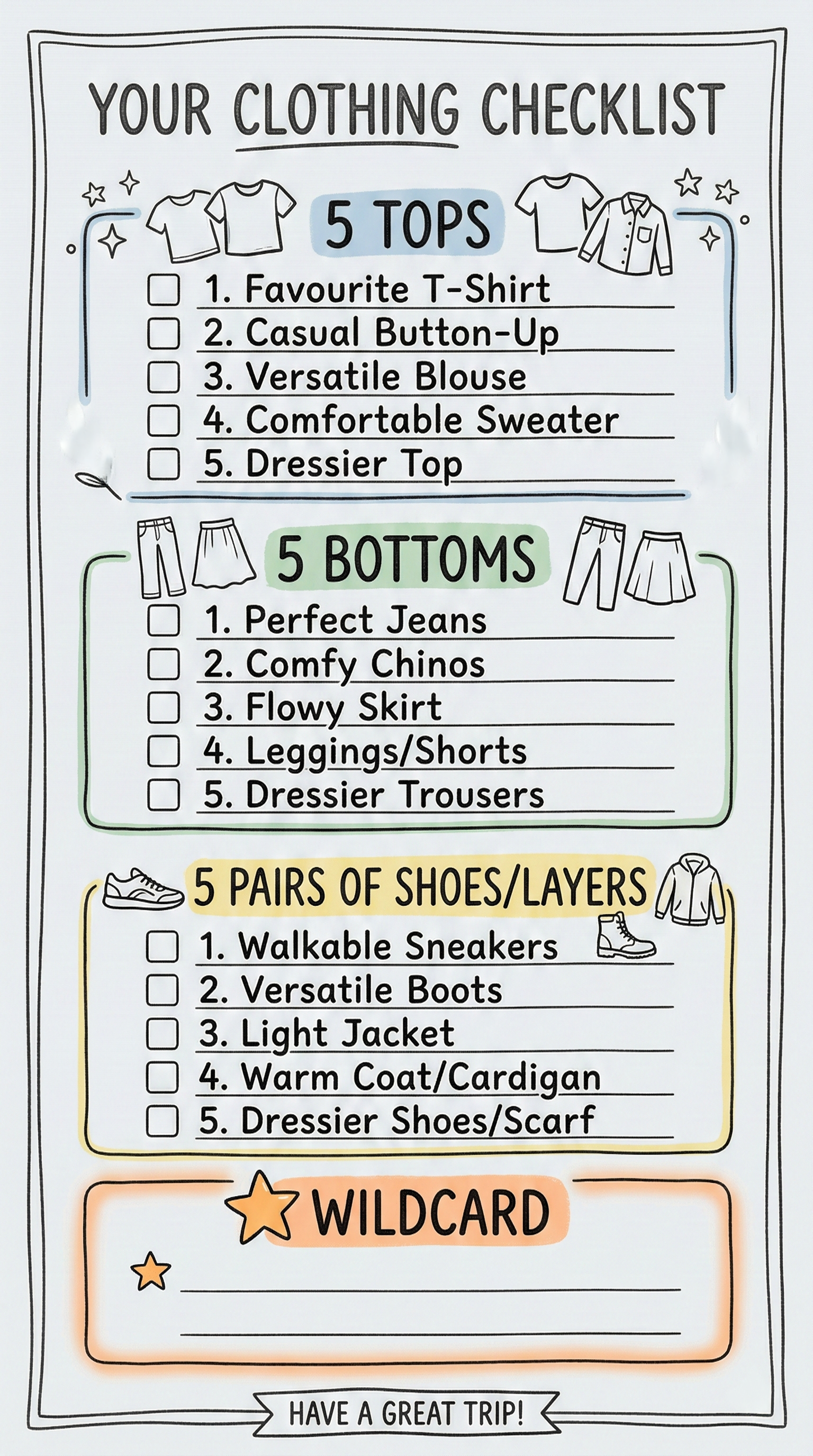 *Fig. 4 - The 5-5-5 method: a simple checklist for building a slightly bigger capsule.*
A practical 5-5-5 capsule wardrobe (that doesn’t fall apart)
5 tops
- 2 casual (t-shirts / long sleeves)
- 2 smart-casual (shirt / knit / nicer top)
- 1 wildcard (your “you” piece)
5 bottoms
- 2 everyday (jeans / relaxed trousers)
- 2 polished (tailored trousers / skirt / smarter option)
- 1 comfort or season piece (shorts, warmer trousers, etc.)
5 shoes
- everyday
- smart
- weather-proof
- comfort-first
- wildcard (the fun pair)
If 5 shoes sounds too many for your lifestyle, swap that category for 5 layers (jacket / coat / overshirt / hoodie / knit).
How to start a capsule wardrobe in 20 minutes
- Pick your “real life” categories: work, weekends, going out, gym, weather.
- Choose 2–3 base neutrals + 1–2 accent colours you genuinely wear.
- Pull your most-worn items first (these are your real staples).
- Use one rule to fill the gaps (3-3-3 or 70/30 or 5-5-5).
- Apply a simple filter: a new item must create 3 outfits with what you already own.
Then stop. Wear your mini-capsule for a few days and notice what you miss. That “missing” list is the only shopping list that matters.
If you want an easier way to see combinations, Outfint was built for exactly this step. Add your capsule pieces to your digital wardrobe, save your go-to looks, and the app shows you outfit combinations you’d never think of on a rushed morning.
Explore the Outfint outfit planner app and browse more wardrobe planning guides.
Final takeaway
Capsule wardrobes work because they reduce decisions, not because you found the perfect number.
Pick one rule (3-3-3, 70/30, or 5-5-5), run it for a week, then adjust based on what you actually wear.
If you want to make that process even easier, Outfint lets you build your capsule digitally, plan outfits by category, and track real wear data, so your wardrobe decisions are based on facts, not guesswork.
FAQ: Capsule Wardrobe Rules Explained
Short answers to the questions we hear most from readers building a capsule wardrobe (aka: people trying to make mornings less dramatic).
What is a capsule wardrobe?
A capsule wardrobe is a curated set of versatile clothing that can be combined in different ways to cover many outfits and occasions, without owning excessive items.
What is the 3-3-3 rule for clothes?
The 3-3-3 rule is a mini capsule wardrobe method: choose 3 tops, 3 bottoms, and 3 pairs of shoes that all mix-and-match to create multiple outfits.
What is the 70/30 wardrobe rule?
The 70/30 wardrobe rule suggests keeping roughly 70% of your wardrobe as everyday essentials and 30% as statement or speciality pieces, so most of what you own is easy to wear while still showing personality.
What is the 5-5-5 rule for clothing?
The 5-5-5 rule is a wardrobe simplification method that limits key categories (commonly 5 tops, 5 bottoms, 5 shoes or layers) to encourage mix-and-match outfits and reduce clutter.
What are the 5 R's of fashion?
The 5 R's of fashion are a guide to more sustainable wardrobe choices: Refuse (avoid buying items you don't need), Reduce (buy fewer, better-quality pieces), Reuse (wear items more often and shop second-hand), Repurpose (give old garments a new use), and Recycle (donate or responsibly dispose of clothes at end of life). Applying the 5 R's is a natural complement to building a capsule wardrobe.