
Sustainable fashion sounds like it should be a shopping category. Organic cotton here, recycled polyester there, a nice green label to make everyone feel calm.
Useful, sometimes. But the more honest version is simpler: sustainable fashion is mostly about buying less, wearing more, and keeping clothes out of the bin for as long as possible.
That is where the 5 R’s of fashion help. They turn a vague idea (“I want to dress more sustainably”) into a practical wardrobe filter you can actually use on a Tuesday morning.
In this guide, we’ll cover what the 5 R’s are, why the order matters, and how to use them without turning your wardrobe into a guilt project.
TL;DR: What are the 5 R’s of fashion?
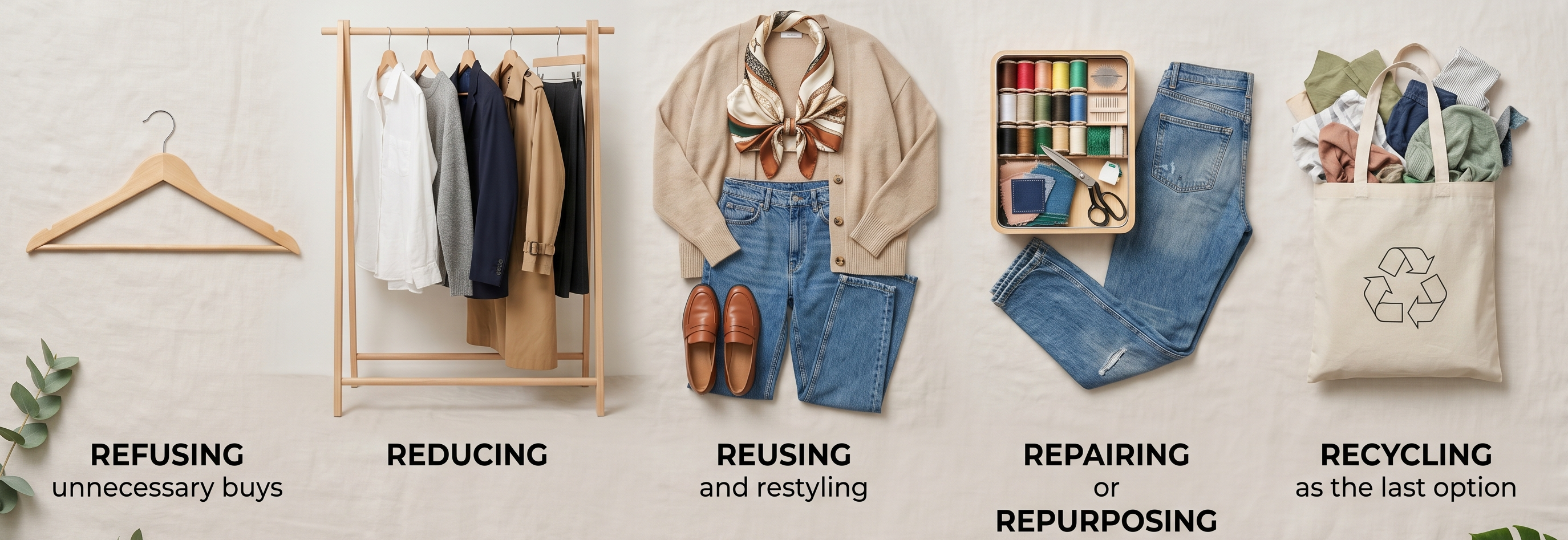
The 5 R’s of fashion are Refuse, Reduce, Reuse, Repair or Repurpose, and Recycle.
In plain English: refuse what you do not need, reduce how much you buy, reuse what you already own, repair or repurpose pieces before replacing them, and recycle clothes responsibly when they have no useful life left.
One note before the internet starts arguing with itself: there is not one official fashion-law version of the 5 R’s. In circular economy frameworks, you will often see a longer list that includes Refuse, Reduce, Reuse, Repair, Refurbish, Remanufacture, Repurpose, and Recycle. UNEP lists those as value-retention processes in its circularity work. For everyday wardrobes, the cleanest consumer version is: Refuse, Reduce, Reuse, Repair or Repurpose, Recycle.
The order matters. Recycle is last for a reason. A jumper you keep wearing is usually doing more good than a jumper you quickly send into a recycling system and replace.
If you want the practical starting point, explore the Outfint outfit planner app and browse more wardrobe planning guides.
Why the 5 R’s matter for sustainable fashion
Fashion has a waste problem because the default system is still too linear: make clothes, sell clothes, wear them a bit, throw them away.
The numbers are not exactly cosy reading. The European Environment Agency says textile consumption in the EU is one of the highest-pressure consumption categories for water and land use, raw materials, and greenhouse gas emissions. European Parliament reporting on textile waste makes the same point from another angle: less than half of used garments are collected for reuse or recycling, and only around 1% of used clothes become new clothes again.
So yes, recycling is part of the answer. But it is not the whole answer, and pretending it is the whole answer is how your wardrobe becomes a guilt-offset machine with sleeves.
The stronger idea is circular fashion. The Ellen MacArthur Foundation describes circular fashion as a system where products are used more, made to be made again, and made from safe, recycled, or renewable inputs. In plain English: clothes should be designed better, worn longer, repaired more often, resold or reused where possible, and recycled only when there is no higher-value option left.
That is exactly what the 5 R’s are trying to make easy: start with prevention, then extend the life of what already exists, then recycle only when the higher-value options are gone.
1. Refuse: stop the wrong clothes before they enter your wardrobe
Refuse is the least glamorous R, which is probably why it works.
It means saying no to clothes that are cheap, tempting, and almost right. The top that needs a different bra. The trousers that only work if you change your entire personality. The event outfit you will wear once and then avoid making eye contact with.
A simple filter helps: would you wear it at least 30 times, does it work with three things you already own, and would you still want it if it were not on sale? If the honest answer is no, that is probably not a wardrobe gap. That is your feed being persuasive.
Refusing is not about never buying anything. It is about blocking the pieces that become clutter, regret, and textile waste.
Outfint tip: before buying, check your digital wardrobe. If you already own three versions of the same “essential” black top, the fourth one is not an essential. It is a repeat offender.
2. Reduce: buy fewer pieces, but make them work harder
Reduce is the part people often skip because it sounds like restriction. It is really just better maths.
If you buy fewer pieces and wear each one more often, your wardrobe gets easier to manage and your cost-per-wear improves. That is better than constantly buying more and somehow still having no outfit.
This is where capsule wardrobe thinking helps. You do not need to become a minimalist monk. You just need more pieces that mix properly, cover your real life, and stop asking you to buy supporting characters every time you get dressed.
Build around repeat-wear basics first. Keep trend pieces as the smaller share, not the whole wardrobe. If a category is already full, use a one-in, one-out rule. And if something feels urgent but suspiciously algorithm-shaped, wait 48 hours before buying it.
The EPA’s waste guidance is blunt in the best way: the most effective way to reduce waste is to not create it in the first place. For fashion, that means fewer weak purchases at the front door.
For a more structured version, read our capsule wardrobe guide.
3. Reuse: wear, restyle, borrow, lend, repeat
Reuse is where sustainable fashion gets much less theoretical.
It means wearing what you own more often, styling it in more than one way, shopping second-hand when you do need something, and passing clothes on while they still have real life left.
That might mean restyling the same shirt for work, dinner, and weekends. It might mean buying second-hand denim instead of new, borrowing a one-off occasion piece, selling or donating wearable clothes instead of binning them, or simply rotating forgotten pieces back into outfits.
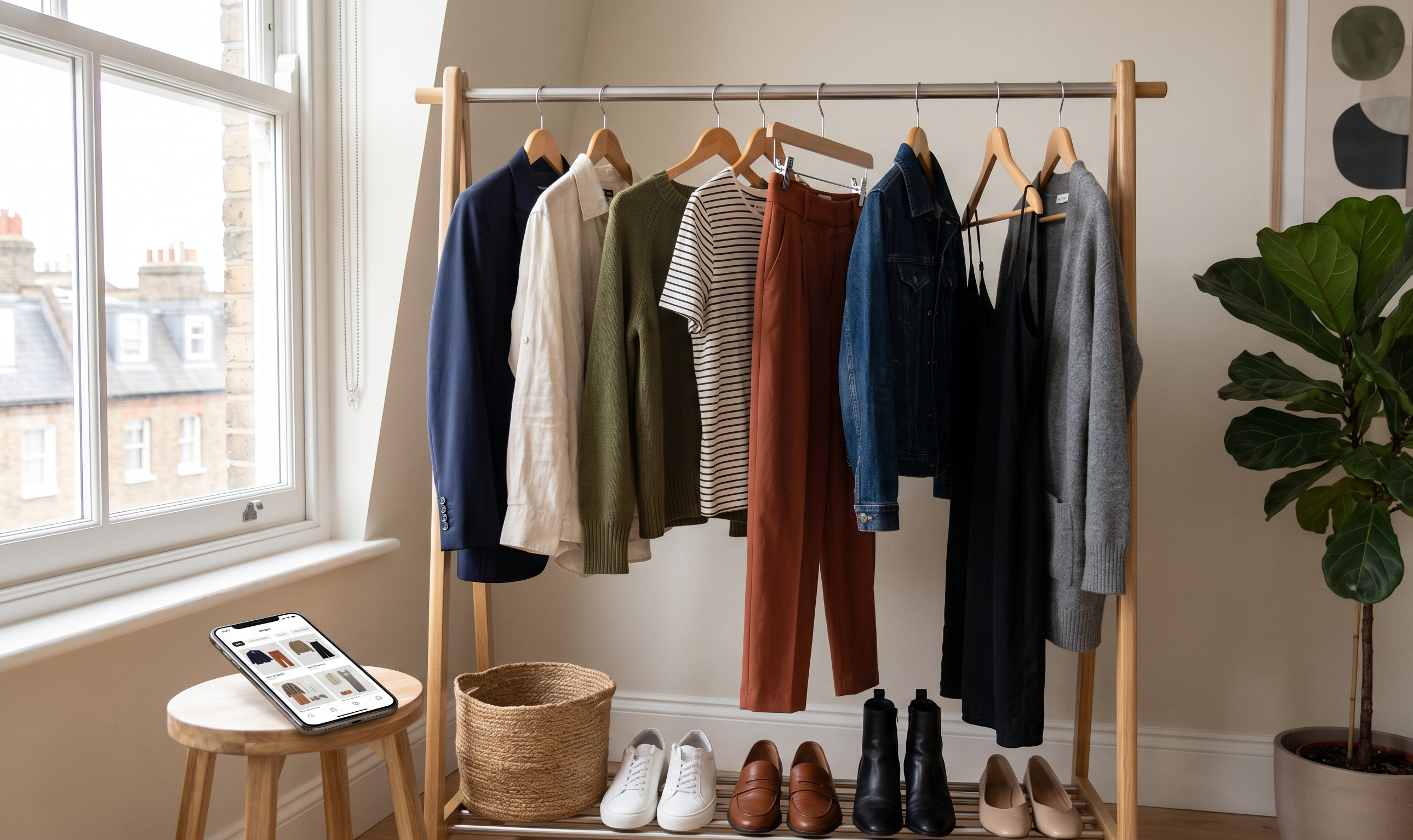 Fig. 1 - Reuse is where sustainable fashion gets practical: wear what you own, restyle it, and make your wardrobe easier to see.
This is also where a wardrobe app is genuinely useful. Most people do not need more clothes. They need better visibility.
With Outfint, you can digitise what you own, save outfit combinations, and spot pieces you have forgotten about. Reuse gets easier when your wardrobe is searchable instead of living as a vague pile of fabric memory.
This is also the point where “sustainable fashion” stops meaning “find a better thing to buy” and starts meaning “make the thing I already bought do more work.”
4. Repair or repurpose: fix the good stuff before replacing it
Here is the R that varies depending on who you ask.
Some lists use Repair. Some use Repurpose. In real wardrobes, you want both.
Repair keeps an item in its original role. That could be sewing on a button, fixing a fallen hem, patching denim, replacing a zip, resoling shoes, or removing pills from knitwear.
Repurpose gives the item a new role. Worn jeans can become shorts. A damaged tee can be cropped. A faded garment can be dyed. Old cotton tops can become cleaning cloths. Something that no longer fits your current style might only need tailoring, not replacing.
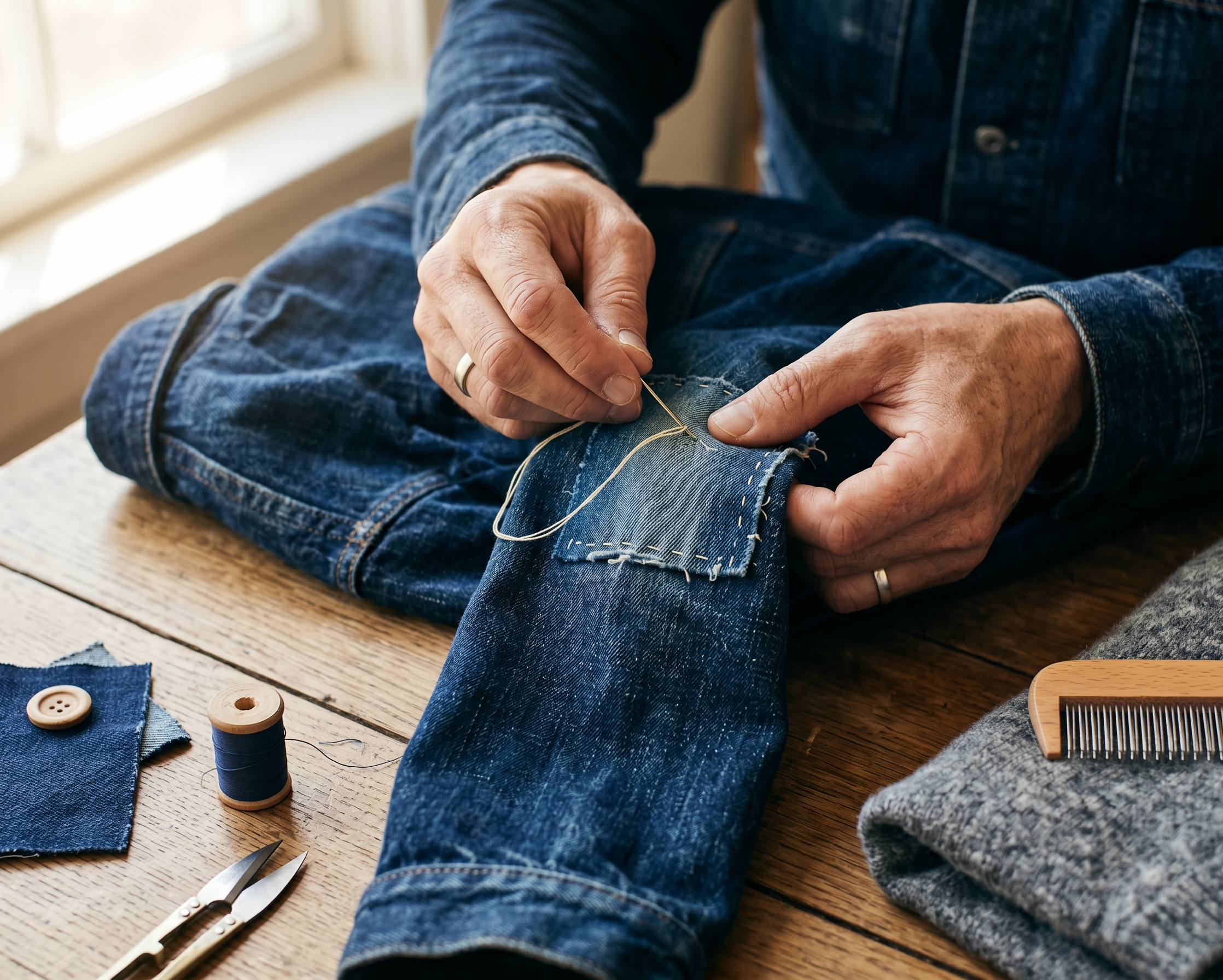 Fig. 2 - A small repair can keep a good piece in rotation for much longer than replacing it.
This is not about pretending every torn sock is a craft project. Some things are finished. But a surprising number of “dead” clothes are only one small fix away from being wearable again.
The EPA specifically recommends maintaining and repairing products, including clothing, so they do not need to be thrown out and replaced as often. That is sustainable fashion without the branding ceremony: a small fix that avoids a new purchase is still a win.
5. Recycle: do it properly, but do it last
Recycle is important. It is just not magic.
Clothing recycling is harder than recycling a glass bottle. Many garments are fibre blends, dyed, trimmed, stretched, coated, or stitched in ways that make textile-to-textile recycling difficult. That is why recycling belongs after refuse, reduce, reuse, and repair/repurpose.
Use recycling when the item is not wearable, cannot realistically be repaired, is unsuitable for donation or resale, and your local programme clearly accepts that textile type.
Before recycling, check the rules. Some collection points accept worn-out textiles. Some only want clean, dry clothing. Some routes are for resale, not true recycling. If in doubt, read the local instructions instead of wish-cycling and hoping the sorting facility enjoys surprises.
Also be honest about condition. If something is wearable, reuse routes usually make more sense: resale, donation, swaps, or passing it to someone who actually wants it. Recycling is for the end of the road, not the first exit.
The better goal is not “recycle more clothes faster.” It is “create fewer end-of-life clothes in the first place.”
A practical 5 R’s wardrobe audit
If you want to apply the 5 R’s this week, do not empty your entire closet onto the bed unless you enjoy making yourself a hostage situation.
Start with one category: tops, jeans, shoes, knitwear, outerwear, whatever is causing the most chaos.
 Fig. 3 - Start with one category and look for patterns: impulse buys, duplicates, forgotten favourites, repair jobs, and true end-of-life pieces.
Then sort each item by what it is teaching you. Some pieces are refuse next time lessons: the almost-right buys you should not repeat. Some are reduce duplicates signals because you own too many versions of the same thing. Some are reuse more pieces you like but forget to wear. Some belong in repair or repurpose because the problem is fixable. And a small number may be recycle responsibly items that are no longer wearable and cannot be fixed.
The useful bit is not the piles. It is the pattern.
If most of your problem clothes are impulse buys, your biggest R is Refuse. If you own ten near-identical basics but wear two, your biggest R is Reduce. If your favourite clothes are hidden behind clothes you never wear, your biggest R is Reuse.
Once you know the pattern, add the keepers to Outfint and start building actual outfits from them. Sustainable fashion gets much easier when your wardrobe has a memory better than yours.
What the 5 R’s are not
The 5 R’s are not a purity test.
They do not mean never buying new clothes, only shopping second-hand, keeping uncomfortable clothes out of guilt, becoming a capsule wardrobe robot, or trusting every “conscious” label without checking the details.
They are a decision order. That is it.
Before you buy, ask: can I refuse or reduce? Before you replace, ask: can I reuse, repair, or repurpose? Before you throw away, ask: is there a responsible recycling route?
That tiny pause is where better wardrobe decisions happen.
Final takeaway
The 5 R’s of fashion are a practical framework for sustainable fashion: Refuse, Reduce, Reuse, Repair or Repurpose, and Recycle.
The real point is not to make your wardrobe look virtuous. It is to make it work harder, last longer, and generate less waste.
Start with what you already own. Wear it more. Fix the good pieces. Stop buying the almost-right ones. Recycle only when something has genuinely reached the end.
That is sustainable fashion with less performance and more actual impact.
Sources
- UNEP - Circularity
- EPA - Reducing and Reusing Basics
- Ellen MacArthur Foundation - Circular economy in fashion
- European Environment Agency - Textiles
- European Parliament - Fast fashion and sustainable textile consumption
FAQ: The 5 R’s of Sustainable Fashion
Short answers to the questions people usually ask when they are trying to make sustainable fashion practical and use the 5 R’s of fashion without overthinking every outfit.
What are the 5 R's of fashion?
The 5 R's of fashion are Refuse, Reduce, Reuse, Repair or Repurpose, and Recycle. They help you avoid unnecessary purchases, buy less, use clothes for longer, fix or rework pieces, and recycle responsibly at end of life.
Why are the 5 R's important for sustainable fashion?
They move your wardrobe away from a take-make-waste model and toward a circular fashion mindset, where clothes are kept in use for longer, repair and reuse come before disposal, and fewer new resources are needed.
Is recycling the best sustainable fashion option?
No. Recycling is useful, but it should usually come after refusing unnecessary buys, reducing purchases, reusing clothes, and repairing or repurposing what you already own.
How can I start using the 5 R's in my wardrobe?
Start small: audit one clothing category, identify what you wear, repair what is fixable, stop buying duplicate pieces, and only recycle items that are no longer wearable.
What is the difference between repair and repurpose in fashion?
Repair keeps an item in its original role, like sewing on a button or fixing a hem. Repurpose gives the item a new role, like turning worn jeans into shorts or using old cotton tops as cleaning cloths.